



Rethinking Mathematics Test Preparation: By Making It Hands-On, Engaging, and Fun
For many elementary school students, math test preparation means worksheets, practice questions, and repeated exercises. While these activities are important, they can be stressful. Students may be learning the steps without truly understanding the math or feeling confident in their abilities succeed on the assessment test.
During the summer of 2026, The Black Data Guy brought its Driving to Success to Make Fractions Easy program to PS 189, introducing third, fourth, and fifth grade students to a play based hands-on approach to math instruction and test preparation.
Driving to Success brings the math in the workbook to life. Students use wooden race cars, ramps, measurement, and experimentation to connect abstract math concepts to real-world experiences.
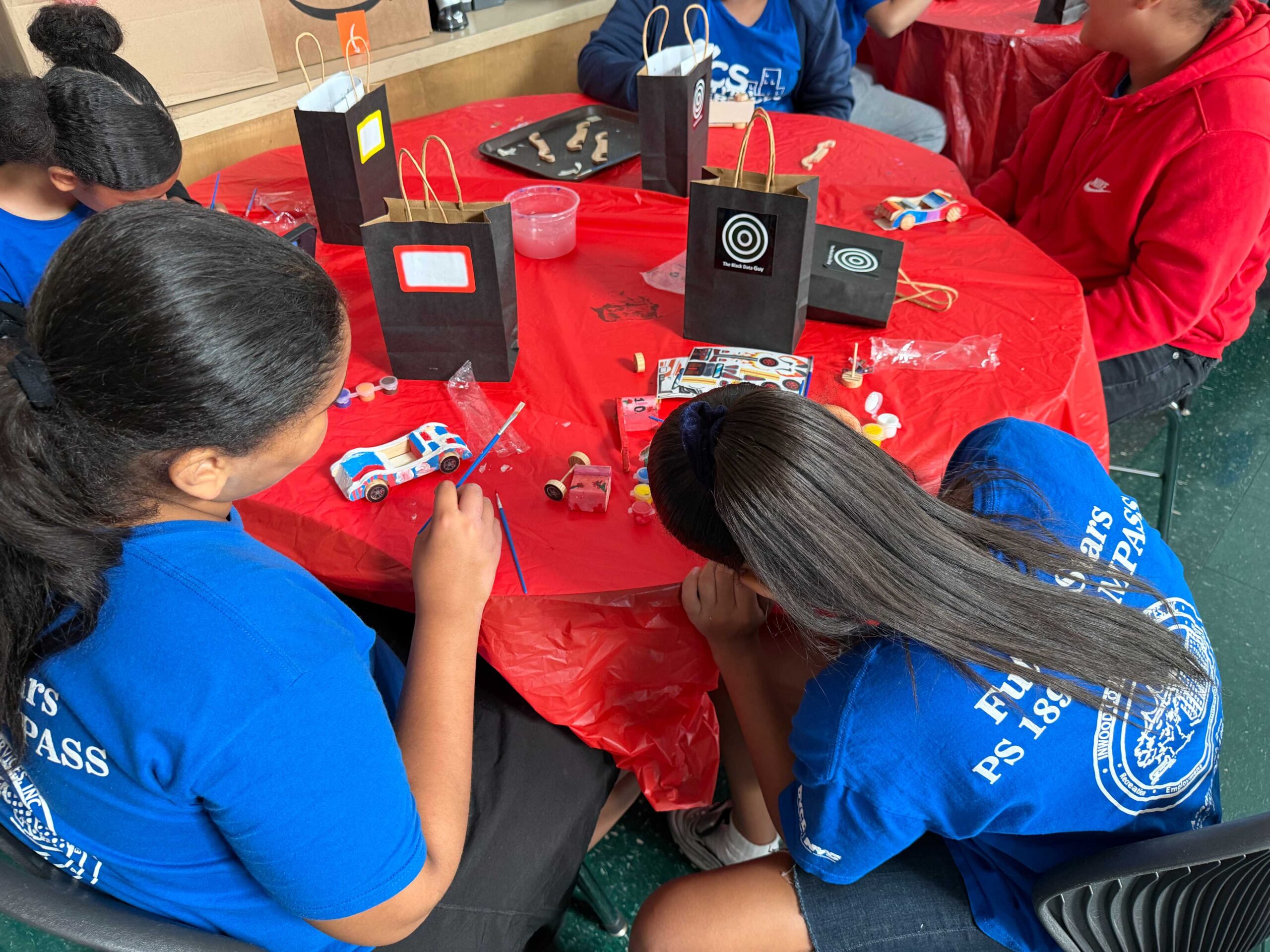
Students painted and assembled their own race cars, built ramps, measured distances, and worked through grade specific math questions.
The goal was to help students see, build, and understand math while reinforcing the knowledge and problem-solving skills they need for New York State mathematics assessments.
The Black Data Guy brings math off the page and into students’ hands in ways that are engaging, meaningful, and fun. Each lesson begins with five minutes of starter questions, followed by 30 minutes of hands-on, play-based learning. Students build structures, explore patterns, and solve problems through experimentation. The lesson ends with three test-preparation questions drawn from the types of math assessments students will take at the end of the school year.
Preparing Students Through Participation
Driving to Success is built on a simple belief: math becomes more meaningful when students can see it, touch it, measure it, and use it to understand the world around them.
The PS 189 summer 2026 experience shows how an academically rigorous workbook, wooden race cars, and simple ramps can bring math to life while reinforcing test-preparation skills.
By combining hands-on activities with structured peer-to-peer learning and differentiated instruction, the program gives teachers a practical way to support students at different learning levels and help them master the math.
Students who understand the math can help explain it to classmates who are motivated but need additional support. Teachers can then focus more attention on students who need help engaging with the lesson or more intensive, individualized instruction.
The goal is to help every student understand the math, build confidence, and feel motivated to participate.
Step 1: Building Excitement Through Creativity
The experience began with students making their wooden race cars their own.
Using paintbrushes, colorful paints, and their imaginations, students turned unfinished wooden car bodies into unique creations.
Some painted bold racing stripes. Others experimented with pink, blue, red, black, and other colors. Decorative details and decals allowed students to create cars that reflected their individual personalities.
Step 2: From Art Project to Engineering Challenge
Once the cars were painted, students began putting the pieces together.
As students built their cars, they explored a simple engineering concept: how something is built can affect how it performs. They also explored the roles of gravity and friction in the movement of a car. The hands-on experience brought to life questions that engineers ask every day:
- What makes a car roll smoothly?
- Why might two cars travel different distances?
- How could the design or construction of a car influence its movement?
- What could we change to improve its performance?
Step 3: Transforming the School into a Mathematics Laboratory
With their cars ready, students took their learning beyond the classroom tables.
Using a cardboard ramp positioned on the floor, students released their cars from the top and observed how far they traveled.
Their creative projects now became hands-on tools for exploring math.
Watching a car roll down a ramp made distance, measurement, motion, and data collection tangible. Why did one car travel farther than another? What role did the ramp play? Would the results change if the car were released again?
These questions helped connect real-world experiences to mathematical and scientific reasoning.
Step 4: Making Mathematics Visible
One of the most important features of Driving to Success is that students connect the math they are learning to something they have already experienced.
Distance is no longer just a number on a worksheet. It represents how far a student’s own car traveled. Measurement becomes meaningful because it helps answer a question the student cares about.
Using the ramp and measuring tape, students can explore fractions, compare distances, work with units of measurement, analyze differences, and represent their results.
Students can move from watching their cars roll to recording and organizing measurements, then using math to explain what happened.
This connection between hands-on experiences and abstract math is at the heart of The Black Data Guy’s approach.
The goal is not simply to make math fun. It is to help students understand what the numbers actually mean and how math can help them make sense of the world around them.